Edgar Haircut: The Complete Guide to the Viral Cut
The Edgar haircut features a blunt straight fringe with faded sides. Origin, variations, how to ask for it, and how it compares to the broccoli cut.
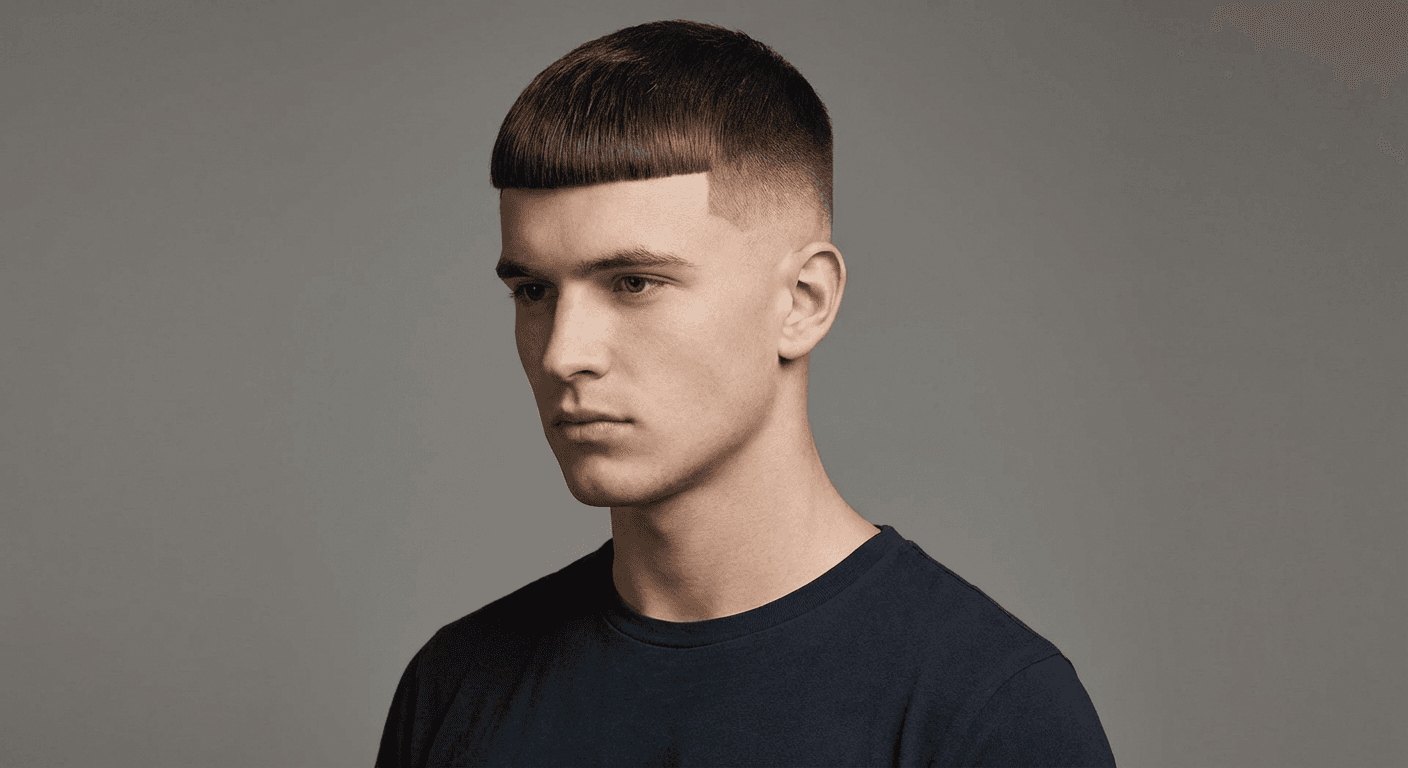
Walk into any barbershop in Texas, scroll TikTok for thirty seconds, or look around a middle school hallway, and you'll see it: a short, blunt fringe cut straight across the forehead, sitting above skin-faded sides. Sharp. Geometric. Impossible to ignore.
That's the Edgar haircut, and it's one of the most recognizable men's cuts of the last decade.
This is our complete guide to the Edgar. We cover what it actually is, where it came from and why its Latino roots matter, the variations you've probably seen named (the fluffy Edgar, the takuache), exactly how to ask your barber for one, who it suits, and how it stacks up against the curly broccoli cut. If you're deciding between looks, this is the deep dive on the Edgar side.
What Is an Edgar Haircut?
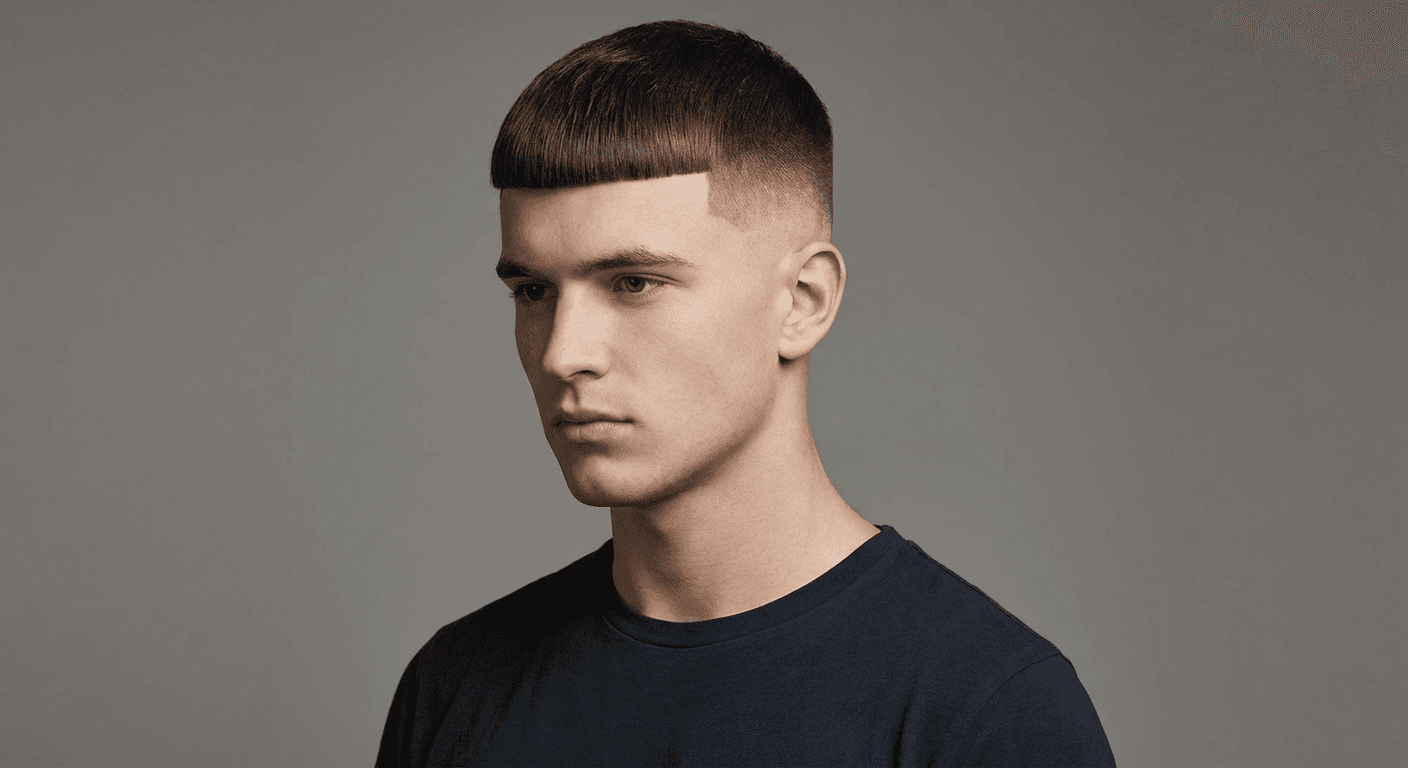
An Edgar haircut is a men's style with a short, blunt fringe cut straight across the forehead and high-faded or tapered sides. The fringe sits at a hard horizontal line, and the contrast between that flat front and the clipped sides gives the cut its signature angular, almost helmet-like silhouette. It works on straight, wavy, and curly hair because the defining feature is the line, not the texture.
The Basics: What Makes an Edgar
The Edgar comes down to two things working together: the fringe and the fade.
The fringe is cut blunt and short, running in a straight line across the forehead rather than tapering down at the temples. Some barbers cut it dead level; others angle it slightly forward so the front edge sits lower than the crown. Either way, the front reads as a clean horizontal block.
The sides and back are taken down with a high taper or skin fade. The higher and tighter the fade, the more the flat fringe pops against it. That contrast is the entire point of the cut. A soft, grown-out fade undersells the look; a sharp skin fade makes the geometry obvious. The fade options here mirror the ones on a broccoli cut — our fade and taper guide breaks down low, mid, high, burst, and drop, all of which work under an Edgar fringe.
The name reportedly traces back to a barber and a regular client named Edgar in the US Southwest, though the exact origin story shifts depending on who's telling it. What everyone agrees on is that the cut spread out of Mexican-American barbershops and became a regional signature before TikTok carried it everywhere.
Why Is It Called an Edgar Haircut?
It's called an Edgar because the style is widely credited to a barber who cut it for a client of that name, and the label stuck as the cut traveled between shops. Like a lot of barbershop names, it spread by word of mouth rather than from any official source, which is why you'll hear slightly different origin stories in El Paso, San Antonio, and Los Angeles. The takeaway is the same: the name came from the community that made the cut popular, not from a brand or a celebrity.
Where Did the Edgar Come From? Latino Roots
The Edgar isn't just a trend that bubbled up on a social platform. It grew out of Mexican-American communities in the US Southwest, particularly in Texas, Arizona, and California. According to Wikipedia, the cut is "often associated with Latino culture" and gained traction in border states before going mainstream.
This origin matters. The Los Angeles Times ran an appreciation piece calling it "L.A.'s essential haircut," and for a lot of people who wear it, the Edgar carries meaning beyond looking sharp. It's tied to heritage, neighborhood, and a specific barbershop tradition.
That cultural weight has cut both ways. In 2021, a high school in El Paso tried to ban the cut, calling it a "distraction," which set off a real backlash about cultural discrimination. The Edgar is a haircut, but for many it's also identity, and that's part of why it provokes strong reactions.
Edgar Cut Variations
The base Edgar is the blunt fringe over a high fade. From there, a handful of named variations have taken off.
The fluffy Edgar keeps the straight fringe but adds volume and texture on top instead of leaving it flat. The front is still cut to a line, but the crown gets some lift and movement. This is the variation that borrows most from the broccoli aesthetic — if it's the volume you're after, the broccoli cut commits to it fully.
The takuache Edgar is the version most tied to truck-and-boots "takuache" culture in the Southwest. It pairs the Edgar fringe with extra height and a slicked, voluminous top, often longer than a standard Edgar. The look is bigger and more dramatic up top while keeping the hard front line.
The textured Edgar breaks up the blunt fringe with point-cutting so the front line looks softer and more lived-in, while still reading as an Edgar. Good for guys who want the shape without the helmet sharpness.
The curly Edgar applies the cut to naturally curly or wavy hair. The fringe is shaped to a line, but the curls give it a different, fuzzier front edge. It proves the point that the Edgar is about the cut, not the hair type.
How to Ask Your Barber for an Edgar
Most barbers, especially in the Southwest, will know exactly what you mean if you just say "Edgar." But specifying a few details gets you a cleaner result.
The fringe: Ask for a blunt, straight fringe across the forehead. Tell your barber how low you want the front line to sit (eyebrow level is common) and whether you want it dead level or angled slightly forward.
The fade: Decide on a high taper or a skin fade. A skin fade gives the sharpest contrast; a high taper is a touch softer. The higher the fade, the more the fringe stands out.
Top length and texture: For a classic Edgar, keep the top short and flat. For a fluffy or takuache version, ask for more length and volume up top while keeping the front line.
Reference photos: Bring two or three pictures showing the exact fringe height and fade you want, ideally from the front and the side. The Edgar lives or dies on that front line, so a clear reference helps a lot.
If you're not sure how low the fringe should sit or how the fade reads against your face, previewing the look on your own photo first saves a conversation at the chair.
Who Does the Edgar Suit?
Because the Edgar is defined by a line rather than a texture, it's flexible across hair types. Face shape is where it gets more selective.
Oval faces handle almost any cut, the Edgar included. The balanced proportions take the strong horizontal fringe without issue.
Square faces pair well with the Edgar. The geometric front line complements an already angular jaw and cheekbones.
Oblong faces can actually benefit. A horizontal fringe visually shortens a long face, adding balance where vertical height would hurt.
Round faces should approach carefully. The wide, flat fringe can make a round face read even wider. A higher, tighter fade helps offset this.
Heart-shaped faces are a tougher match. The straight line across a wider forehead doesn't always flatter a narrower chin. A textured or slightly angled fringe softens it.
For a full breakdown of how cuts read against each face shape, our face shape guide covers the modifications in detail.
Edgar vs Broccoli: The Short Version
The Edgar and the broccoli cut are the two faces of Gen Z men's hair, and people constantly mix them up. They share faded sides and a meme reputation, but they're opposites in shape.
The Edgar is straight, blunt, and angular: a flat fringe and a hard front line. The broccoli cut is curly, voluminous, and rounded: a floret of texture on top, no defined fringe. One is a helmet; the other is a vegetable.
They also come from different places. The broccoli cut emerged from TikTok and K-pop styling with no strong regional or ethnic home, while the Edgar grew out of Mexican-American barbershop culture in the Southwest. If you want the full head-to-head, including hair-type requirements, maintenance, and cost, read our broccoli haircut vs edgar cut comparison.
| Feature | Edgar Cut | Broccoli Cut |
|---|---|---|
| Top texture | Straight, flat | Curly, voluminous |
| Front | Blunt, straight fringe | No defined fringe |
| Overall shape | Angular, blocky | Rounded, fluffy |
| Hair type | Any | Curly or permed |
| Roots | Latino Southwest | TikTok / K-pop |
If your hair is straight and you don't want to commit to a perm, the Edgar is the easier entry point. If you've got curls and want height instead of a hard line, the broccoli cut is the move. And if you can't decide, you don't have to guess.
Maintenance: What to Expect
The Edgar is lower-effort to style day to day but higher-effort at the barber. Because the cut depends on a crisp fringe and a tight fade, both grow out visibly fast. Plan on a trim every two to three weeks to keep the front line and the fade sharp. Any unevenness in the fringe shows up immediately.
Daily styling is simpler than the broccoli cut. A little pomade, wax, or matte clay keeps the fringe flat and in place, and that's usually it. You're maintaining a shape, not coaxing curls into definition. For the fluffy and takuache versions, you'll add a bit of product for height, but it's still less fuss than a full curly routine.
The Meme Factor
The Edgar gets memed as hard as the broccoli cut, just differently. The jokes lean on the blunt fringe ("the bowl is back"), the regional takuache association, and the observation that an entire friend group will show up with the identical front line. As with the broccoli cut and its broccoli haircut meme ecosystem, the people who wear the Edgar are usually in on it.
There's a sharper edge to some Edgar discourse, though, because of the El Paso ban and the stereotyping that's followed the cut around. Plenty of the humor is affectionate; some of it shades into the cultural prejudice the LA Times and others have pushed back on. Worth knowing the difference if you're going to make the joke.
Try Any Gen Z Cut Before You Commit
Here's the useful part. You don't have to pick between the Edgar and the broccoli cut on faith, and you definitely don't have to sit in the chair to find out a blunt fringe doesn't suit your face.
Our AI tool was built for the broccoli cut, but it's really a "see this Gen Z look on your face" machine. Upload a selfie and preview an Edgar-adjacent fringe, the curly broccoli silhouette, or a fluffy hybrid of both, before you commit to a single snip. It's the fastest way to settle the Edgar-versus-broccoli question for your own head instead of someone else's reference photo.